Skip to content

Open now closes at 20:00 Season: March 12 – November 30, 2026

Stazione di Chiusaforte

Books

The cooperative's books

Stories, guides and memories of this valley, published by the cooperative.

  1. Schegge di storia 2

    Luigi Marcon Machine translation (DeepL) from Italian

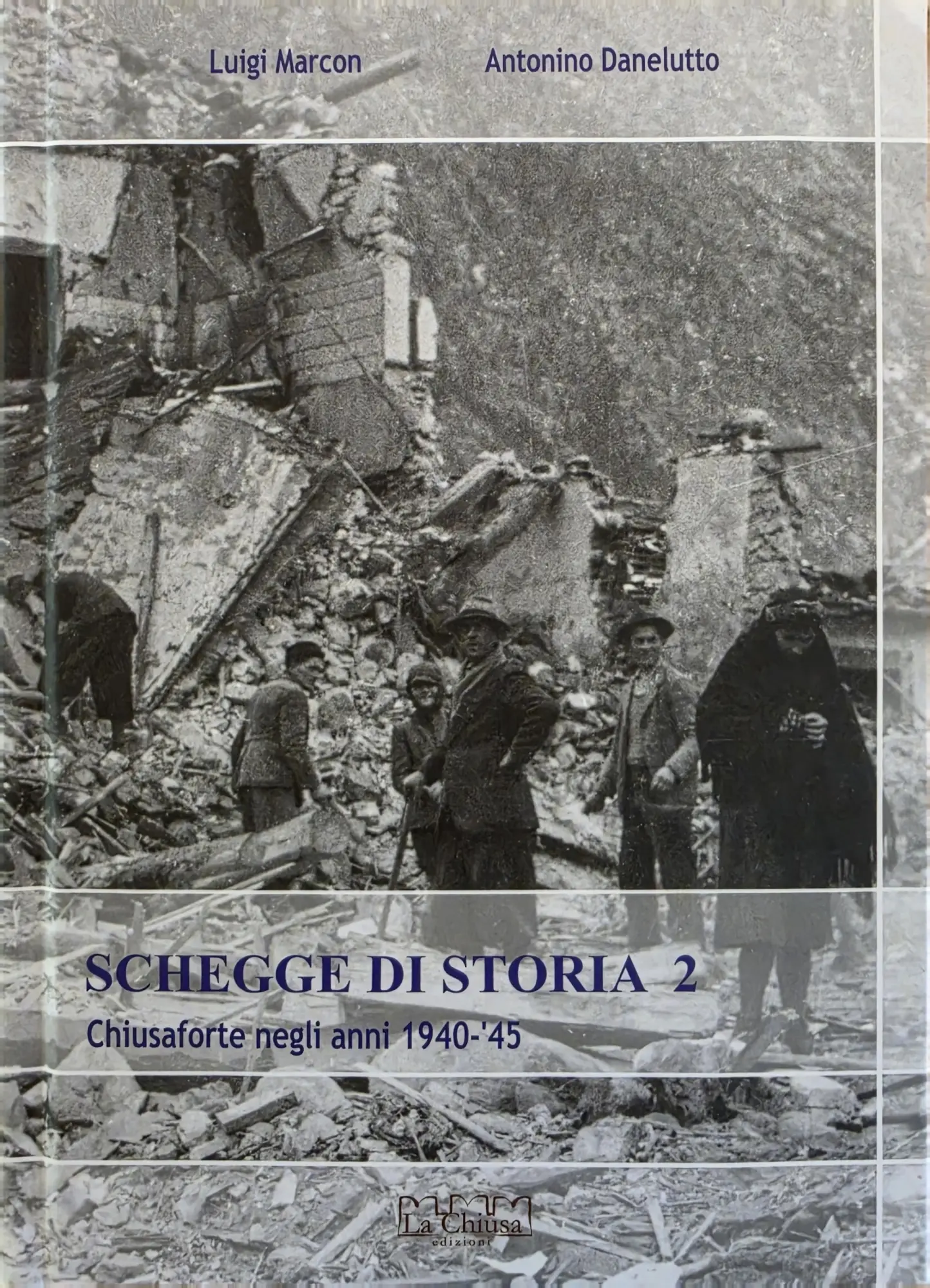
    Following the book *Schegge di storia* (Fragments of History), published in 2015, which recounts the trials and tribulations of the people of the municipalities of Chiusaforte and Raccolana during the Great War, here is *Schegge di storia 2*, which tells the story of how the same community experienced the Second World War. The following section also provides a brief overview of the most significant national and international events and issues that characterised the five years of conflict and which are linked to developments in Friuli, the Julian region and Chiusaforte.

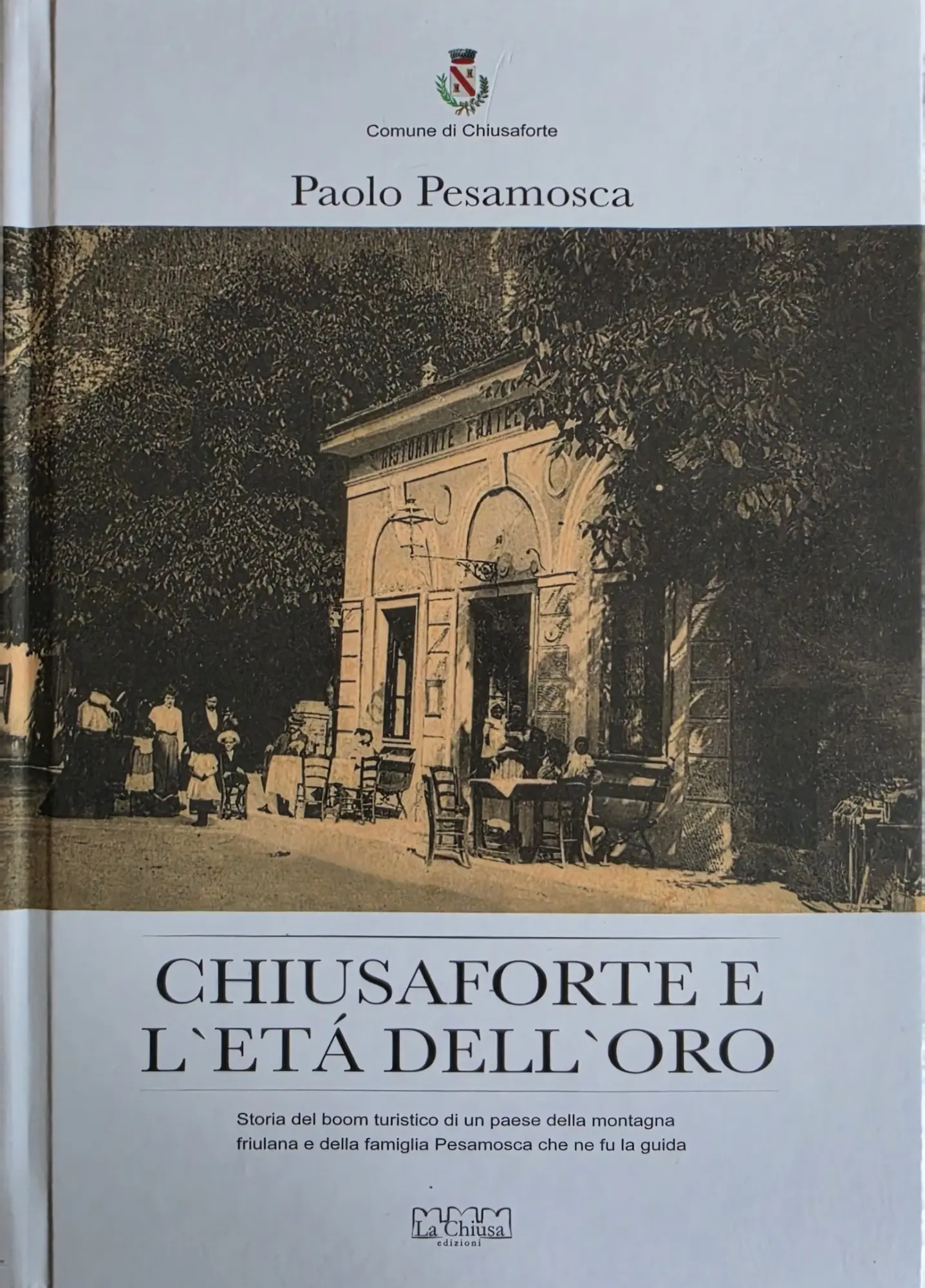
  2. Chiusaforte e l'età dell'oro

    Paolo Pesamosca Machine translation (DeepL) from Italian

    My research into the origins of the Pesamosca family and the village of Chiusaforte has been a fascinating journey for me, spanning several years. The decisive impetus came from my father, Giancarlo, a now-retired university professor, who, at the start of the 2000s, threw himself headlong into researching our family. The result of the long days he spent in the parish archives is a short article published in the magazine ‘Le vôs di Scluse’ in December 2006, which describes the origins of the Pesamosca family in the small hamlet of Raunis. A few years later, I rediscovered his notes, along with a mysterious and fascinating photo album containing several dozen photographs of gentlemen and ladies from the mid-19th century whom I did not recognise. Encouraged by my wife and with her invaluable help, I decided to embark on the seemingly impossible task of identifying these people. An impossible task, yet one that provided me with valuable ideas, information and insights. Gradually, it became increasingly clear to me that the history of the Pesamosca family was inextricably linked to the history of the municipality of Chiusaforte. Or rather, to the history of the village’s golden age – the age of tourism – spanning from the last two decades of the nineteenth century to the First World War. An incredible and unrepeatable period, when the bourgeoisie and nobility of Venice, Udine and Trieste flocked to the village in the summer and filled its two main hotels, the Pesamosca (owned by my ancestors) and the Martina. Hence the idea of writing a book which, starting from the family’s origins in Raunis in 1600, traces its history alongside that of Chiusaforte, analysing how a series of favourable events and circumstances – but also vision and ingenuity – led to the family’s success and the incredible golden age of tourism, right up to the decline of the Pesamosca, which preceded the collapse of the local economy by a few years. Figures such as Sebastiano Pesamosca, known as ‘Miute’, who, in an incredible and mysterious way, amassed the capital necessary for it all to begin; the entrepreneurs Luigi, Valentino and Ferdinando Pesamosca, founders of the ‘Albergo alla Stazione’ and driving forces behind the town’s golden age; and the stern Cecilia Paderni, a noble yet ill-fated schoolmistress who managed to overcome life’s harshest trials, have now vanished into the mists of time, their faces faded on the gravestones of the cemetery. The aim of my book is to bring them back to life, along with the marvellous period that Chiusaforte experienced during those years.

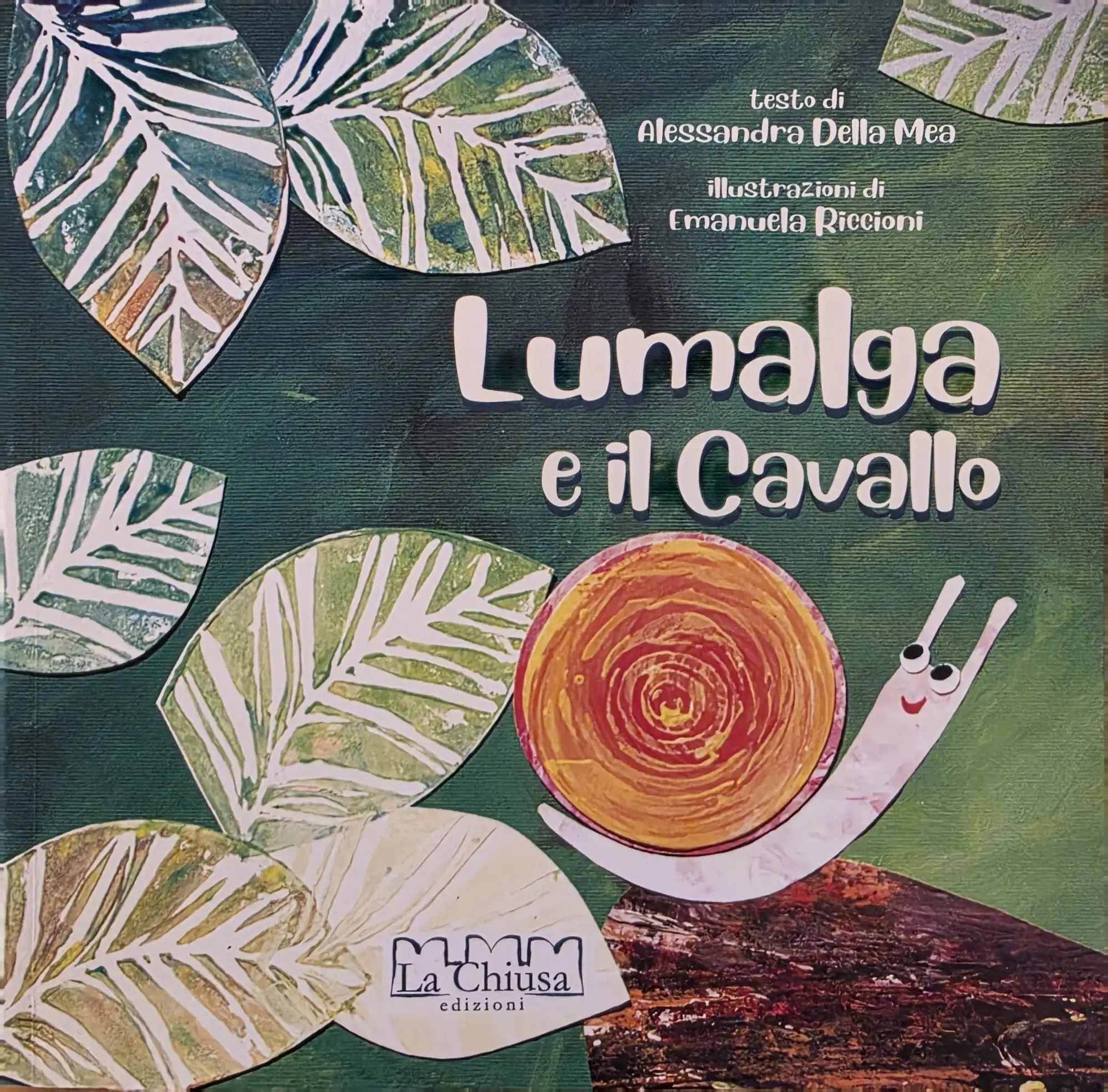
  3. Lumalga e il cavallo

    Alessandra Della Mea - Emanuela Riccioni Machine translation (DeepL) from Italian

    The story behind Lumalga is inspired by a place – more specifically, a mountain hut: Malga Glazzat, situated in the municipality of Pontebba (UD). Its splendid panoramic setting makes it a spectacular vantage point over the nearby peaks of the Carnic Alps, such as Monte Cavallo and Zuc del Bôr, and the Julian Alps, such as the Jof di Montasio and the Mangart. During the summer months, the area comes alive again with people and animals. Livestock are taken up to the mountain pastures in June, when the snow and cold give way to the greening of the pastures. The silence of the cold months disappears and, throughout the summer, you can hear the mooing and the cowbells, the chatter of people and even the sound of car engines. The cows are milked twice a day and their milk is used to make cheese, ricotta and butter. Here, children can enjoy wide open spaces whilst being close to nature and the animals.

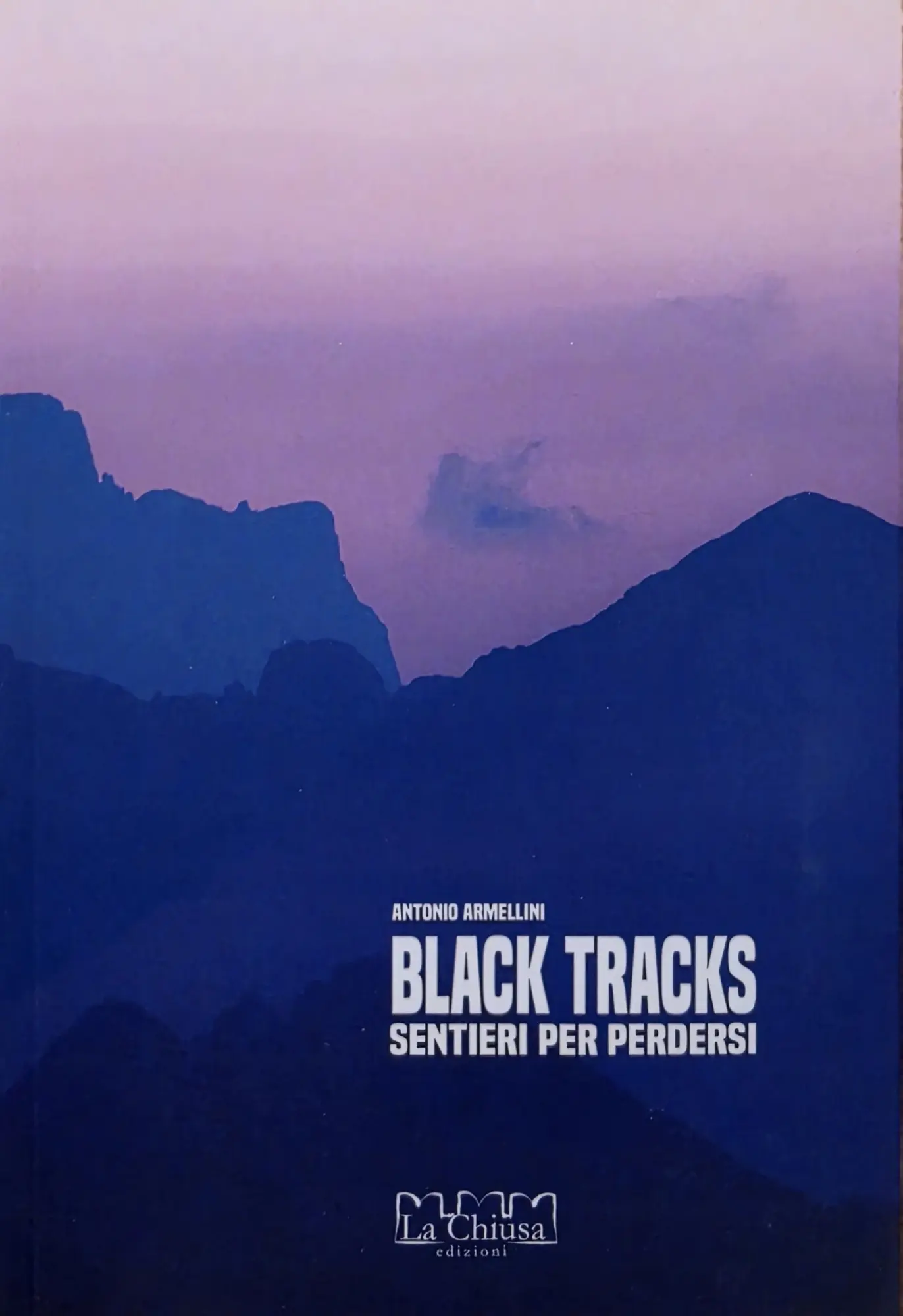
  4. Black Tracks - Sentieri per perdersi

    Antonio Armellini Machine translation (DeepL) from Italian

    Dear Reader, you may be wondering what might have prompted me to publish this rather unusual hiking guide.

    The first reason – believe it or not – is of an existential and philosophical nature, dating back as far as my days at classical grammar school, when I came across the following sentence attributed to Pythagoras, which I have never forgotten since: ‘To feel fully fulfilled, a man should, in his lifetime, plant a tree, build a house, raise a child and write a book.’

    Well, I’ve planted so many trees that I’ve lost count; as for houses, I’ve built two following the earthquake; I’ve got three children, so I’m sorted on that front too.

    Zero books, as it happens; and I intend to put a stop to that.

    Whilst we might debate the first three elements mentioned by Pythagoras as defining a man – given that they were, in my view, rather easy to achieve for a would-be farmer – for a Friulian with a passion for bricks and mortar and for a conservative yet non-conformist man, when writing this book I followed my deepest instincts and I hope to pleasantly surprise you.

    The second reason relates directly to the subject matter of the book itself; this, however, calls for a more detailed discussion – I hope I don’t bore you, as it is, in essence, the story of my passion for the mountains.

    It’s a passion that’s been with me ever since I was a lad, when I used to go up and down the Brigata Julia crag at Crosis with G. N. and a hemp rope – basically a thick piece of string. The dam keeper’s wife would shout at the top of her voice for us to stop, or she’d call the Carabinieri. She was right, of course, but we were at an age when you don’t listen to adults.

    Then peaks, peaks, peaks and rock: all as it should be – situations and training routes that are just right for a young person and their enthusiasm.

    When I was fifteen, I attended a rock-climbing course with the unforgettable Ignazio Piussi and Cirillo Floreanini. And so it went on, with a few forays into geology and palaeontology too, even abroad.

    However, beneath the surface, the curiosity and the desire to explore – symbolised by the unmarked path – were already smouldering, like embers beneath the ashes, and would flare up from time to time: the first ‘Black Track’ I can clearly recall dates back to those teenage years, and it was a solo traverse from Venzone to Lischiazze in search of the Stiliza. I found the route correctly, but I didn’t spot the ladder, even though I’d passed right alongside it, as it was completely hidden by the mountain pines.

    A few years later, quite unexpectedly and by chance, the pivotal encounter in my exploratory journey took place: I met the man whom, even today, I regard as my Master.

    I had just walked into the library of the clinic where I was doing my specialisation and was chatting to a colleague about how intrigued I was by the three mysterious, almost legendary mountain passes in the Musi range.

    The new librarian, who was busy filling in forms but keeping one ear open, looked up and listed the mountain passes for me in an instant, then captivated me with a wealth of detail.

    I was left speechless. How many explorations we went on together after that! I learnt that when it comes to suspecting and finding a Black Track, every clue counts: a dead-end path with no apparent way in, an old dangling cable from a cableway, a trail revealed by the first snow on a distant hillside, a story from an old hunter or dairyman, a military map from the Great War, very often a chamois trail, and sometimes pure reasoning based on experience: there simply has to be a path there.

    Several more years passed – many seasons have gone by – but that elusive fascination has remained, and I find myself wondering why I am so drawn to unmarked paths, even though they are not all that different from those maintained by the C.A.I. sections. What is it that sets them apart?

    I finally got there, and the answer undeniably surprised me; yet, on closer inspection, it represents the second and most genuine reason that drives me along these trails. The essence of this reflection is summed up very effectively by Gautama Buddha:

    Leave the main roads behind; take the footpaths. But you won’t find the path unless you first become the path yourself.

    This is the self-affirmation of the individual that Pythagoras outlined in that phrase of his, which cannot help but be rooted in the natural environment and the archetypes it represents. Nor can a person who loves the mountains ignore the arts and customs of the peoples who have lived in the mountains for centuries; they must be familiar with history, geography and the natural sciences, but above all they must look deep within themselves to understand what they want and, in doing so, learn to become a fully-fledged person.

    To cut a long story short, after this lengthy preamble – which I hope you have read this far, dear Reader – I would like to say that I could not have written about anything else, and that this book truly reflects who I am.
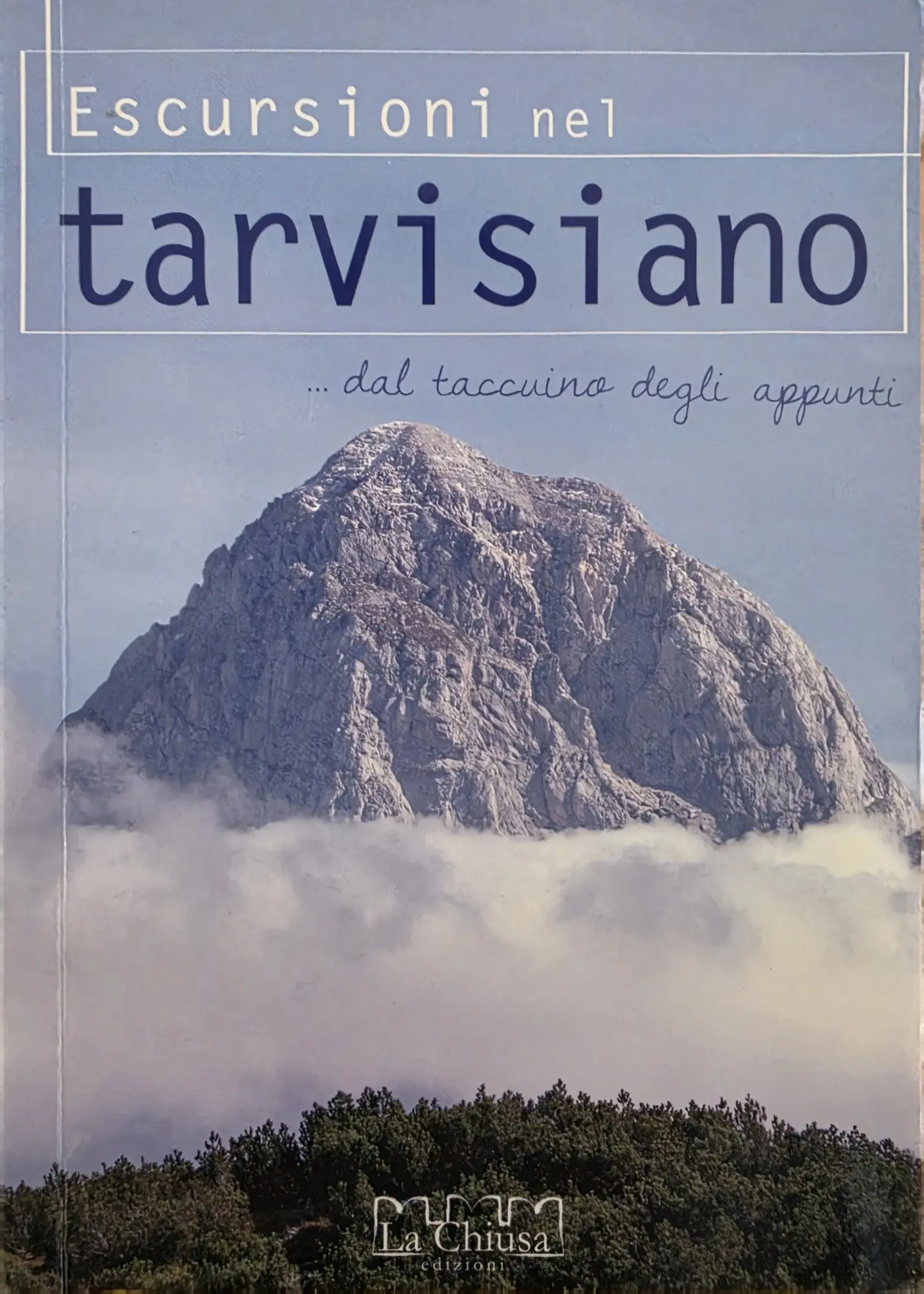
  5. Escursioni nel tarvisiano

    Fabio Paolini Machine translation (DeepL) from Italian

    The routes featured in this guide include the majority of the paths that have been assigned a CAI trail marker. Although they are signposted, the via ferrata routes leading up to the main peaks and the major cross-country routes have been excluded, as these require a level of mountaineering skill rather than simply hiking. There are 46 routes in total; they are generally circular, cover a total distance of over 500 kilometres and involve an accumulated ascent of over 37,000 metres. As regards the full range of accommodation options, bed spaces and facilities at mountain huts or bivouacs, it is advisable to obtain up-to-date information from the organisations managing them on a case-by-case basis before setting off. I have also chosen not to provide guidance on the availability of water along the routes. In recent years, there have in fact been exceptional droughts, even in these mountains, which mean you should set off with a sufficient supply of water to complete the entire hike. As for how to make the most of a guide like this, I’ll try to offer a few suggestions in a light-hearted manner. The experienced hiker, who may already be familiar with the area and for whom a quick glance at the topographical map is enough to decide where to go and obtain the route’s technical details, can read the guide on their return, to check and, if necessary, critique its contents. The hiker who simply lets themselves be carried away by exploring the surroundings, who enjoys being taken by surprise and even sets off without a topographical map, might read only the sections in italics and the thematic inserts, taking care not to dwell on the descriptive parts of the route or look at the photos. The ‘meticulous’ hiker, who likes to plan everything and leave nothing to chance, would be well advised to consult at least two other guidebooks in addition to this one. The impromptu hiker, or those dusting off their boots for their fortnight’s summer holiday, should pay particular attention to the colour of the border around the route title. I’ll pause here to confess that I wrote this guide primarily out of a desire to convey the spirit that drives me as I trek through the mountains. Then, of course, I hope that the information provided will be of some use to the reader and encourage them to visit a region that truly deserves to be discovered. And what if the ideal reader of this guide were someone who will never climb these mountains? Or perhaps someone who, due to life’s twists and turns, has already hung up their boots? Well, who knows!

    The author

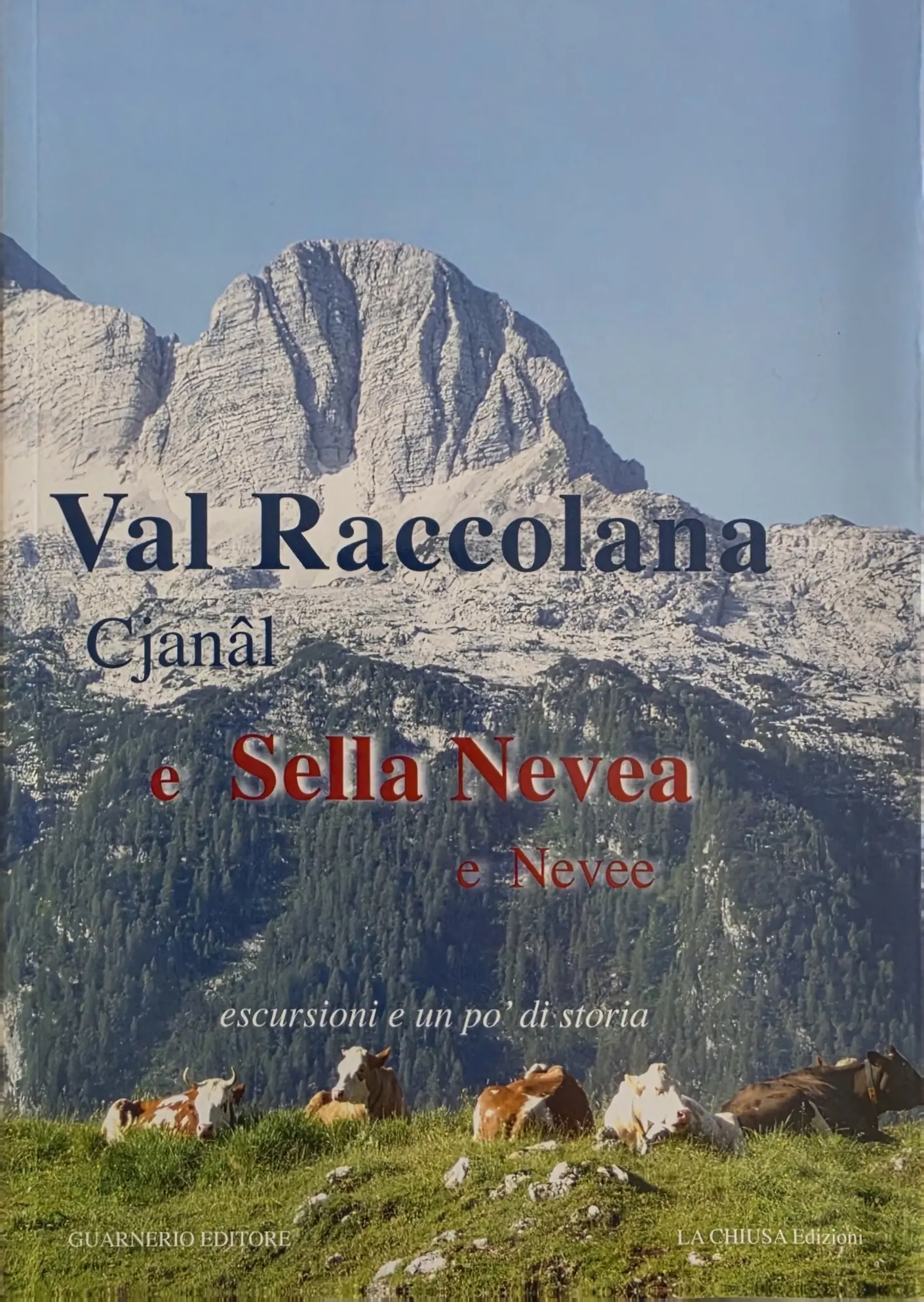
  6. Val Raccolana e Sella Nevea

    Fabio Paolini Machine translation (DeepL) from Italian

    Much has already been written about Val Raccolana, including by such distinguished figures as Giacomo Savorgnan Di Brazzà in his *Studi alpini fatti nella Valle di Raccolana*, Giovanni Marinelli in his *Guida del Canal del Ferro*, Julius Kugy with *The Western Julian Alps – From the Life of a Mountaineer*, and Vladimiro Dougan with the *Guide to the Montasio Group*; more recently by Gino Buscaini in “The Julian Alps – A Guide to the Mountains of Italy” and by Mario Galli and Dario Marini in “The Western Julian Alps”; by local historical researchers: Latino Fuccaro and Antonino Danelutto with *Chiusaforte and the Val Raccolana – From its Origins to the Present Day*, authors of the earlier monumental and seminal work on place-name studies, *Bonds Between a Land and its People*; by Renato Pesamosca, with a history of the local Game Reserve to mark the 50th anniversary of its foundation, and by Antonino Danelutto, in collaboration with Luigi Marcon, with the two-volume work *Schegge di storia*.There is also a wide range of books on the Great War, the compelling biography of Ignazio Piussi, *Ladro di Montagne* by Nereo Zeper, and that of Alfonso Della Mea by Mario Gariup, as well as countless monographs on environmental aspects, places, mountain huts, bivouacs, mountain pastures, footpaths and climbing routes, and the many natural features preserved within that truly unique treasure trove of natural wonders that is the Val Raccolana. Fundamental to providing a clear historical record – and more besides – of the mountaineering events that have taken place on Canin and Montasio are the periodicals published by the Friulian and Julian Alpine Clubs, namely *In Alto* and “Alpi Giulie”, which have spanned a long period, from the late 1800s to the present day. Equally important—and perhaps even more so because they originate locally—are the collections of parish bulletins, which have been in print since 1938.So, what can this guide add to all this? Especially now that, when it comes to the mountains, one can find everything on the internet, updated in real time. I cannot think of an answer to this question: I hope that any reader who has the patience to read through these pages to the very end will be able to do so. For me, travelling through these mountains, talking to those who live here or have lived here, and gaining a better understanding of them through the writings of those who have described them with passion, has been a long and enjoyable adventure. Then again, I know there is so much, so very much still to discover, for every place and for every woman or man who has lived or lives in the valley. I therefore wish to regard this little book as a draft, a first version that can be expanded, perhaps with the very contribution of you, the readers. ‘The mountains, pay attention, are an encyclopaedia, made up of stories, science and geography,’ wrote the Chiusa-born poet Italo Pielli.Well, without needing to become experts, I believe that having a little more knowledge about the various natural features that characterise the places we pass through, and about the human events they have witnessed over time, is essential for getting in tune with the mountains, for trying to feel a sense of belonging to them, in some way.

    The author

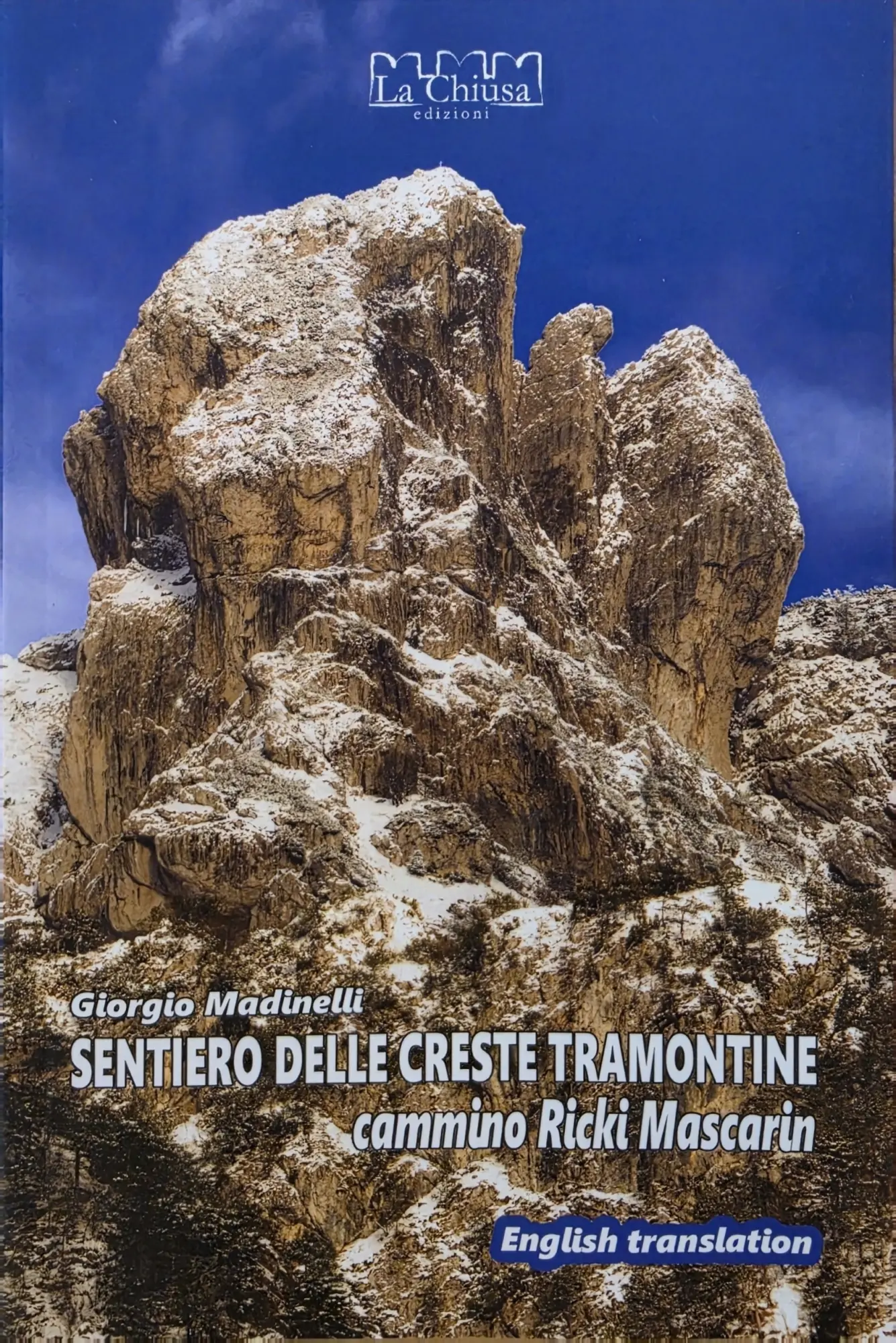
  7. Sentiero delle creste tramontine

    Giorgio Madinelli Machine translation (DeepL) from Italian

    Giorgio Madinelli, a self-styled ‘greppista’, has opened up around a hundred new routes of low and medium difficulty and authored a dozen or so publications on mountaineering; he uploads videos to his YouTube channel and has been updating a blog called ‘latanadellorso’ for years. He has turned the much-maligned Valtramontina into the ideal place to lose oneself and experience the truly harsh and inhospitable environment in which to rediscover his animal archetype or the metempsychosis of a previous soul. Ricki’s love for the mountains began during parish summer camps at San Francesco in Val d’Arzino, with Don Adriano del Bianco – whom we recall as having been the first to equip routes at the Anduins climbing wall. Ricki therefore cut his teeth in the early days of sport climbing and honed his skills on the rock-climbing course run by the Val Montanaia Mountaineering School of the CAI in Pordenone. Together with Giorgio Gasparotto, who was travelling the mountains for his geology studies, he formed a small group of young people from Azzano who were passionate about the mountains, including Giancarlo Corazza, Ivan Biasotto, Francesco Cofone and Ruggero Tonini. Riccardo Ricki Mascarin (Toronto 1960 – Azzano Decimo 2022) erected the pyramid on the summit of Mount Giavons (30 October 2011).

    Continued from the inside back cover

    Even I, who knew absolutely nothing about hiking or climbing, had my first taste of the mountains when I roped up with Ricki to climb the Campanile in Val Montanaia: what a breathtaking initiation! Ricki was an all-round mountaineer who undertook both winter and summer activities, tackling demanding climbs such as the Navasa in Bosconero and the Lacedelli on Cima Scottoni; he also opened several routes in Pramaggiore with Diego Valeri. From the Val d’Arzino of his early days, through the Dolomites and his adventures in the Julian Alps, to Valtramontina – where a trail commemorates him – the circle is complete, framing a life dedicated to the mountains.

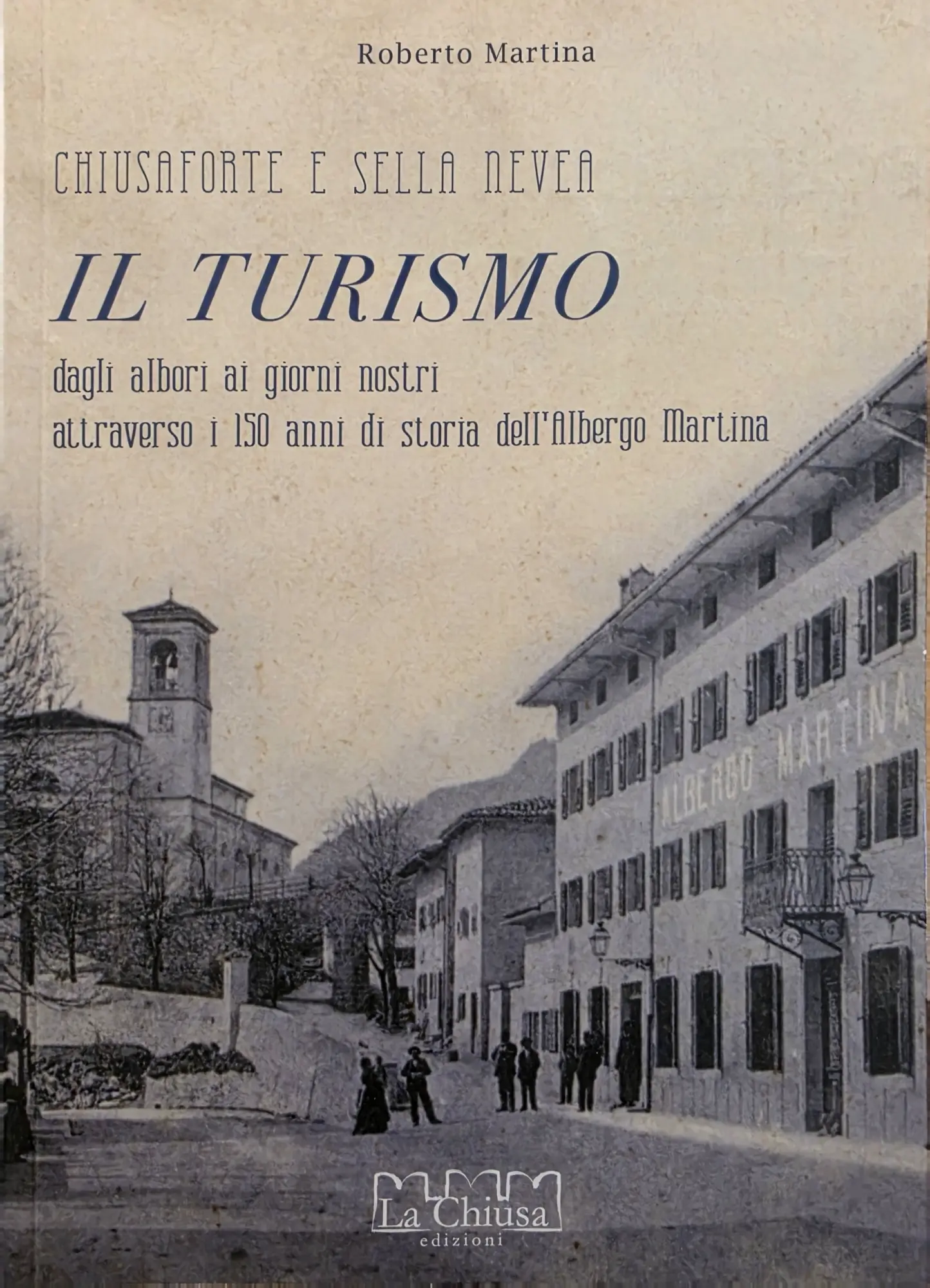
  8. Il turismo

    Roberto Martina Machine translation (DeepL) from Italian

    Precious chronicles of a small, ancient world

    Stories, told with passion and dedication, reconnect us with the past, offer a critical lens through which to understand the present, and enable us to envisage a different future – to see life not only as it is, but also as it ought to be and could be. Stories are the primary means by which women and men communicate and form a community... Bear these words firmly in mind – taken from the wonderful book *The Republic of Imagination* by the Iranian writer Azar Nafisi – and now immerse yourselves in a surprising tale dedicated to Chiusaforte, its valley and the story of a hotel that, for decades, became a crossroads of characters, situations and encounters that no one had yet recounted in this way – by delving into the archives, turning the pages of old newspapers and reviving a memory that the waters of the Fella had carried out to sea.

    Among the many anniversaries in the spotlight during a very eventful 2016, that of the Martina hotel, whose origins date back to 1866, against the backdrop of events in Friuli following its annexation to the Kingdom of Italy, is one of the most intriguing precisely because it reveals previously unknown and unexpected aspects. Details that the reader will discover whilst perusing the results of the research carried out with skill and care by Roberto Martina, who presents, as if in a sort of novel, a myriad of episodes and names. Take, for example, Giuseppe Picciòla. And who was this man? A man of letters, a patriot, an Istrian born in Poreč, and a close friend of Guglielmo Oberdan. At some point he left his homeland, fleeing from Trieste – which was still under Austrian rule – and choosing Italy instead, where he enrolled at the University of Bologna, winning the affection of a teacher of the stature of Giosuè Carducci. Picciòla, who went on to enjoy a prestigious teaching career, culminating in his appointment as headmaster of Italy’s leading grammar school, the Galileo Galilei in Florence, knew the Friulian mountains well, and Chiusaforte in particular, because it was here that he would meet up with his father and relatives, and it was closer to “his sweet, contested homeland”. As a keen holidaymaker, he recommended a visit to Carducci, who, in the summer of 1885, spent a much-celebrated holiday in Piano d’Arta, in Carnia, a place later immortalised in the verses of ‘Il Comune rustico’.

    “Come, come, come: in Chiusaforte you’ll eat a reasonably good piece of meat and drink a glass of wine that’s not half bad; then we’ll go together to Pontebba...” wrote the enthusiastic Picciòla, perhaps fearing he might not be exaggerating too much in describing the valley’s attractions. The great poet was persuaded and set off on 26 August, taking the train from Gemona, accompanied by Count Gropplero. A trace of this illustrious visit remained in a brief, breathless report in a daily newspaper: “Today, the proud, puffing steam train brought amongst us the distinguished writer of liberty; the bard of Satan, the manly figure of the citizen Giosuè Carducci...” But it was not only the greatest national poet who made the journey to Chiusaforte in those years. The literary world was also represented by the Trieste-based poetesses Ida Finzi, known by her pen name Haydée, and Elda Gianelli, who composed three sonnets later included in a collection entitled *Ricordi di Chiusaforte* (*Memories of Chiusaforte*). Owing to its charm and proximity to the border, the village served as a focal point and meeting place for many exponents of irredentism, often writers or painters, as in the case of Gustavo Hess, mentioned in a short story about the romantic escapades of a beautiful Venetian noblewoman on a semi-clandestine holiday.

    These are anecdotes and characters which, as is always the case in such settings, emerge from the glittering world of tourism amongst idle and relaxed folk, for whom a glance was worth more than a state-of-the-art text message. You’ll find them in abundance amongst the 13,881 travellers listed in the Nevea mountain refuge register, published by the *Giornale di Udine* in 1905. The opening took place in 1888, arousing curiosity and attracting a great many people, including some rather unusual ones, such as Giulio Priuli, who on 26 August of that year wrote the following about himself: “1.87 metres tall, born in 1834, weighing 126 kg, having reached an altitude of 1,160 metres; I hope his peers of the same weight can do the same.”

    In the second half of the nineteenth century and at the start of the twentieth century, Chiusaforte (thanks to the careful management of its hotels) was one of the tourist hubs of Friuli, alongside Comeglians on the Carnic side and Tarcento in the foothills. These were peaceful villages, set in beautiful countryside, easily reached by train or tram without any hassle. Thus, the village along the Fella Valley – already known for its historic role as a customs post – earned charming nicknames such as ‘the Aosta of Friuli’, having previously been known as ‘Little Venice’. Many figures, some well-known, others less so, have passed through here: one day, a slender young man arrived with a group of cyclists who had set off from Palmanova; he was Ardito Desio, the geologist who led the expedition to K2. And then, over the years, there was the composer Mario Mascagni, cousin of the famous Pietro; Prince Umberto; the writer Chino Ermacora; Senator Tiziano Tessitori; artists such as Marcello Mascherini and Ernesto Mitri; and also Julius Kugy, Giovanni Marinelli, Carlo Kechler, Fabio Luzzatto, and the American painter Emily O. Garrison – all part of a truly impressive gallery of figures.

    All of this was recorded and noted in the registers of the Martina hotel, which played a vital role alongside the other hotel, Pesamosca. Roberto Martina recounted with affection the stories of his family, from the founders through the various changes in management right up to its closure following the earthquake. Through flashes of memory, chronicles and images, he has preserved an extraordinary history that was in danger of being lost and remaining unknown. He now entrusts it to those who, by reading it anew, can piece together the threads to give Chiusaforte a sense of a lost past. Wandering through its empty streets and listening carefully, one can hear the faint notes of a mazurka – the very one dedicated to the village – which used to be played on 24 August, the feast day of St Bartholomew, in front of a huge crowd. Just as numerous as the documents that have resurfaced in this research. They were waiting for someone to recover them, giving them meaning, logic and a soul. At last, it has happened.

    Paolo Medeossi

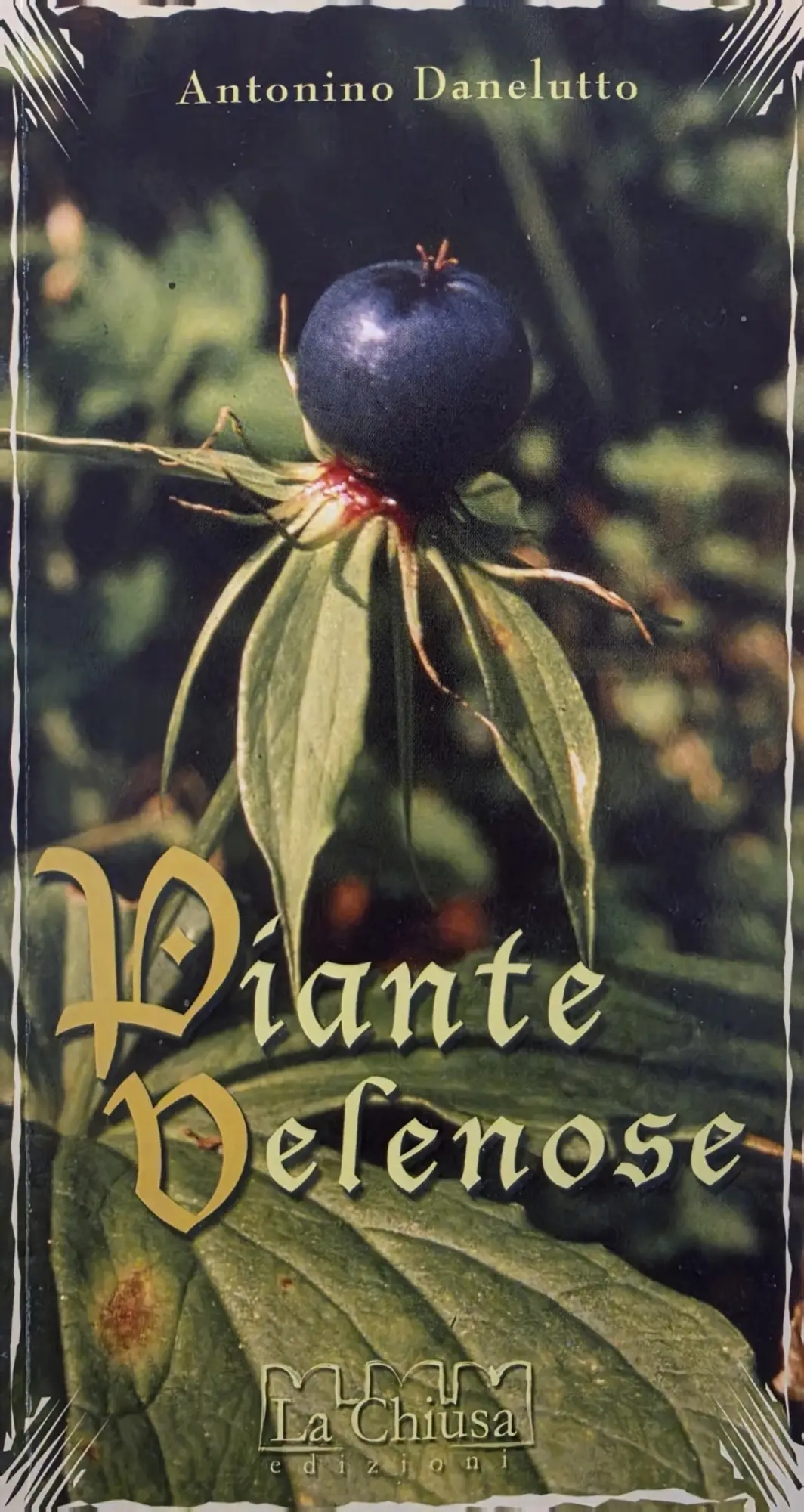
  9. Piante Velenose

    Antonino Danelutto Machine translation (DeepL) from Italian

    Medicinal plants, alongside those used for food, have from the very beginning represented humankind’s first contact with the plant world. Myths, legends, deities and ancient symbols often refer to plants; the identity of some peoples is expressed through the foliage of trees. The development of scientific botany, beginning in the second half of the 18th century, in which plant species are studied for their own sake, regardless of their use, has not severed this profound and vital relationship, which stems from humanity’s deep-seated awareness that its life – from breath and food to manufactured goods – depends largely on the primary production of plants. Synthetic pharmacology in recent decades has displaced a great many plant-based medicines from European pharmacopoeias, even though plants’ contribution to global drug production is estimated at around 25 per cent. The traditional use of plant-based self-medication has now all but disappeared, whilst a renewed interest in alternative medicines and gentle therapies is spreading, partly fuelled by the environmentalist movement. However, the risks of poisoning from plants with a high content of active ingredients – and therefore potentially very dangerous to humans – remain ever-present. Dr Danelutto, a passionate scholar of botany, has therefore done well to compile this fine booklet, rich in information and illustrations, the latter drawn first-hand from the regional flora during countless exploratory excursions. It covers the toxic species found in the flora of Friuli-Venezia Giulia – around forty in total – many of which have provided the pharmacopoeia with numerous medicines; however, it is important to be able to recognise them because, if ingested – especially when fresh – and particularly by children, they can have serious consequences. The subject matter, which is always complex, is appropriately organised into fact sheets to assist the reader; it is treated with great rigour and bibliographical care and reflects the current state of knowledge in both botany and pharmacology. We must hope that the work of our friend Dr Danelutto will receive the welcome it deserves from the most attentive readers and contribute to the accurate dissemination of pharmacobotanical information, so often marred by charlatanism.

    Livio Poldini

    Professor Emeritus – University of Trieste

    Department of Life Sciences

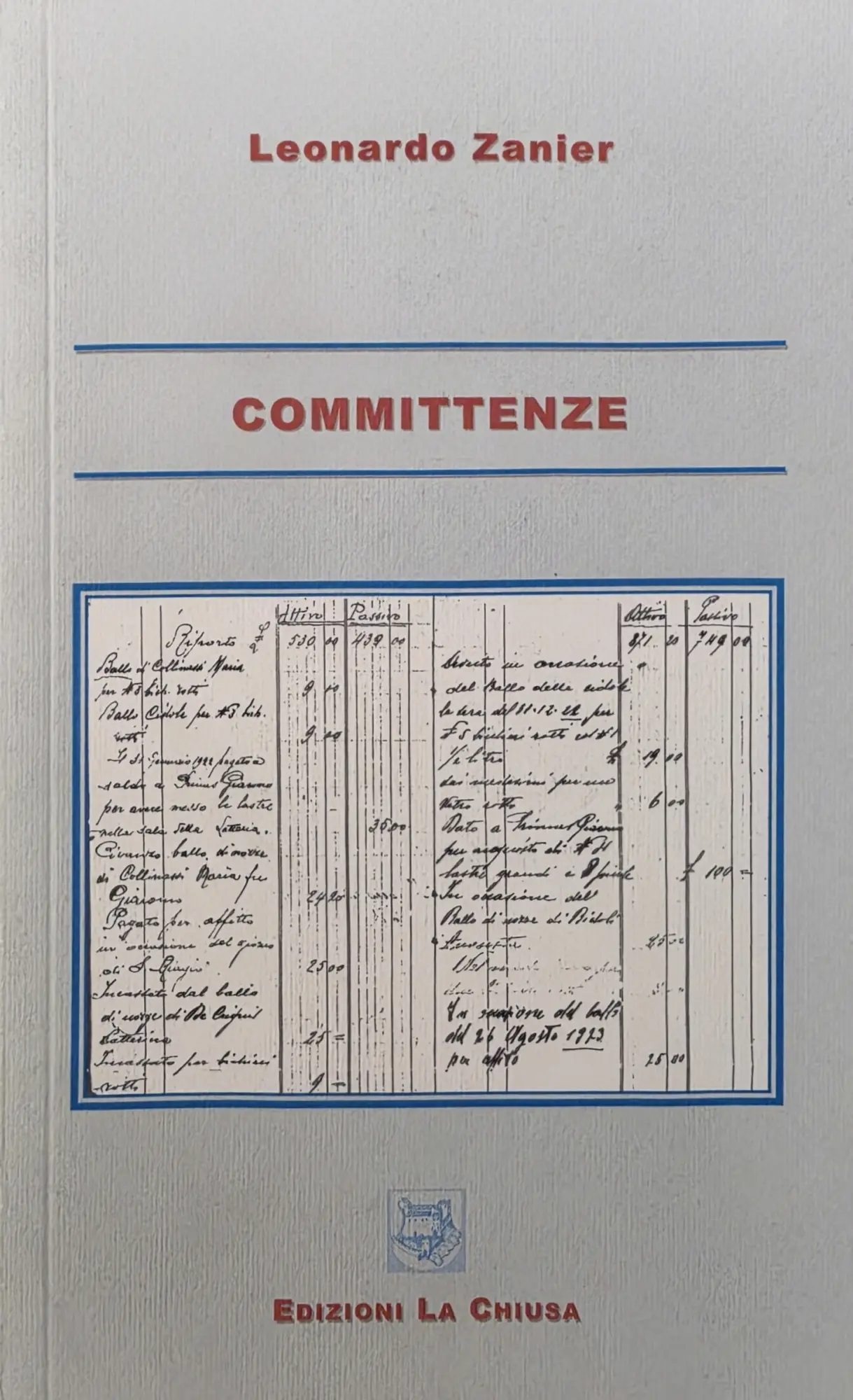
  10. Committenze

    Leonardo Zanier Machine translation (DeepL) from Italian

    This book, too, bears witness to Zanier’s originality and his focus on the ‘construction’ of the text. Committenze: the title tells us that these are writings produced on request, published here in their original form and version. The order is reverse chronological, that is, from the recent *Achtung! Koiné* (2000–2001) to *La prima lataria* (1957).

    From the foreword by Elvio Guagnini

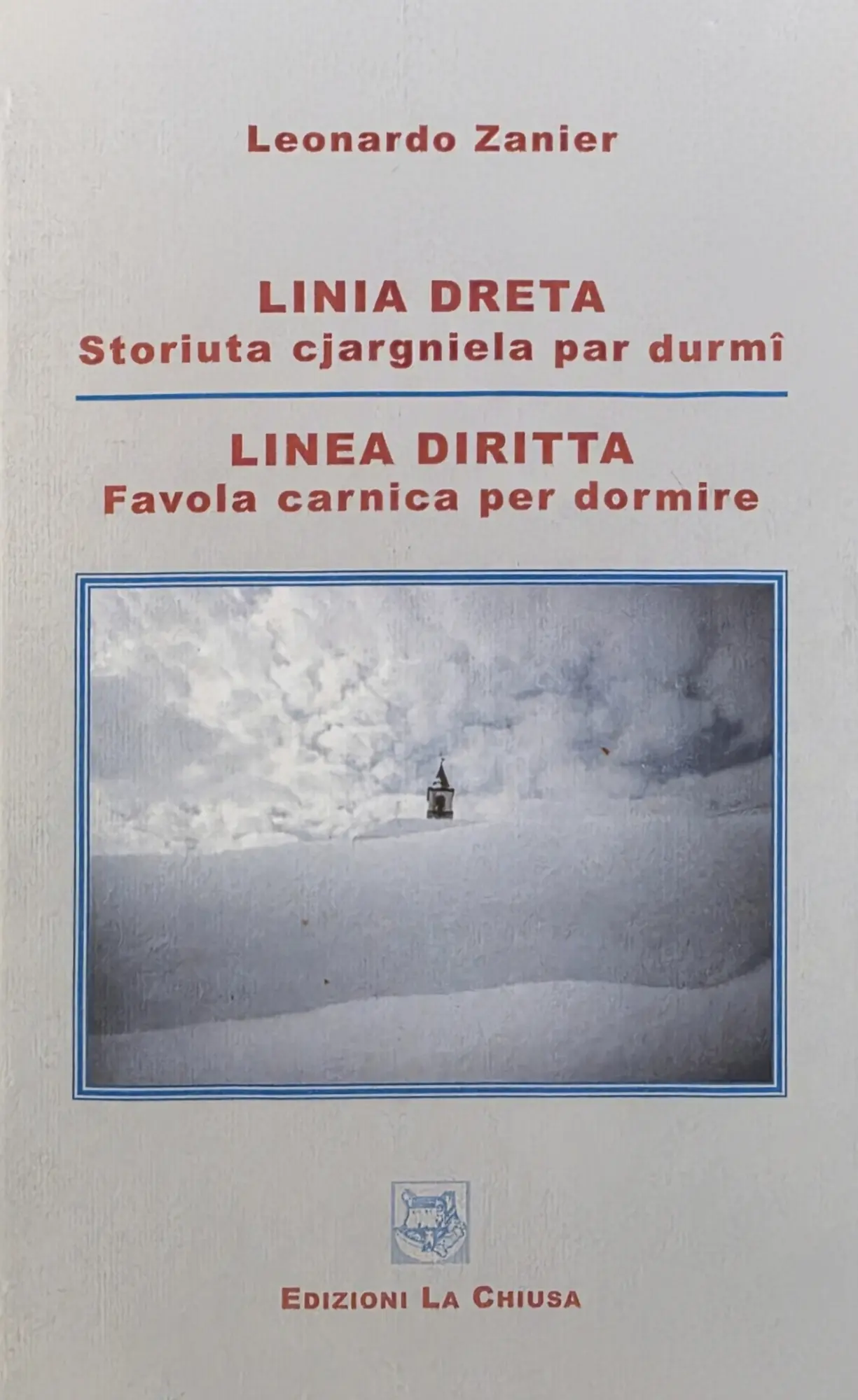
  11. Linea diritta

    Leonardo Zanier Machine translation (DeepL) from Italian

    This ‘Dreta’ programme teaches that it is beneficial to help children make sense of the world (their own culture, the cultures of others, the interplay of cultures, and themselves) through the metaphor of a journey. It encourages them to consider that ‘journey’ is a complex term encompassing many practices, forms of knowledge, experiences, relationships and truly fundamental states of mind. To travel, one must leave something and someone behind; one must set a destination, make the necessary preparations, follow routes, cherish memories and nurture hope; it is necessary to cross borders, face dangers, adapt to circumstances, ask for and offer help, assess one’s own prejudices, and, always, meet people. Encounters with certain people then leave a lasting mark on one’s life; they end up, as in this story, fuelling new desires and setting new journeys in motion, prompting one to make a home far from home.

    From the afterword by Gian Paolo Grì

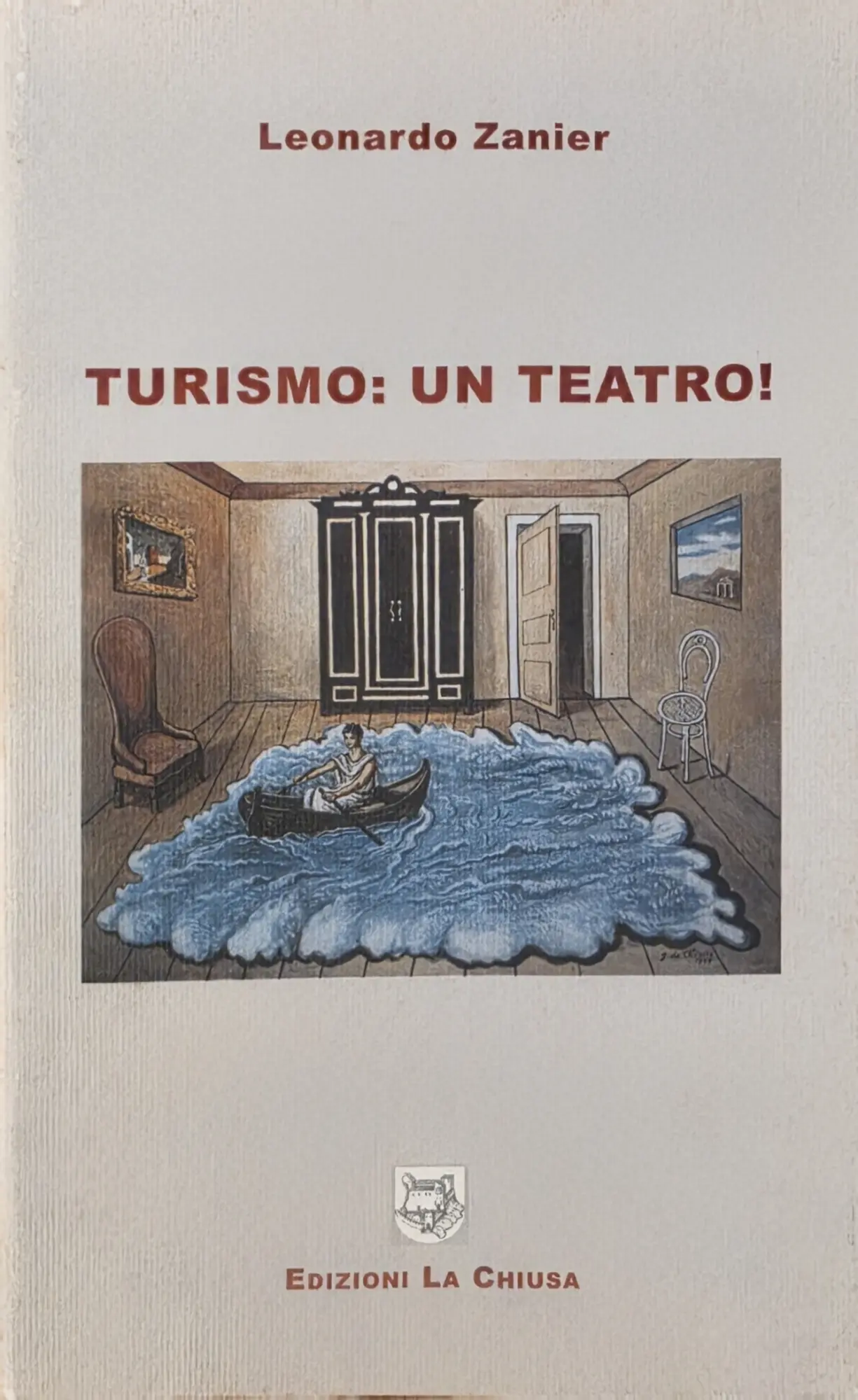
  12. Turismo: Un teatro!

    Leonardo Zanier Machine translation (DeepL) from Italian

    ... One need only look behind, beneath or beyond the surface layers, or shift one’s position or perspective, and suddenly things reveal startling hidden aspects and unsuspected depths of truth that the seemingly clear light of everyday life masks, obscures or completely distorts. But then, precisely, one no longer merely looks, but truly sees – as if through dazzling and unsettling revelations

    From the afterword by Angela Felice

Install the Stazione app

It opens like an app, and the pages you have seen stay readable even where there is no signal.